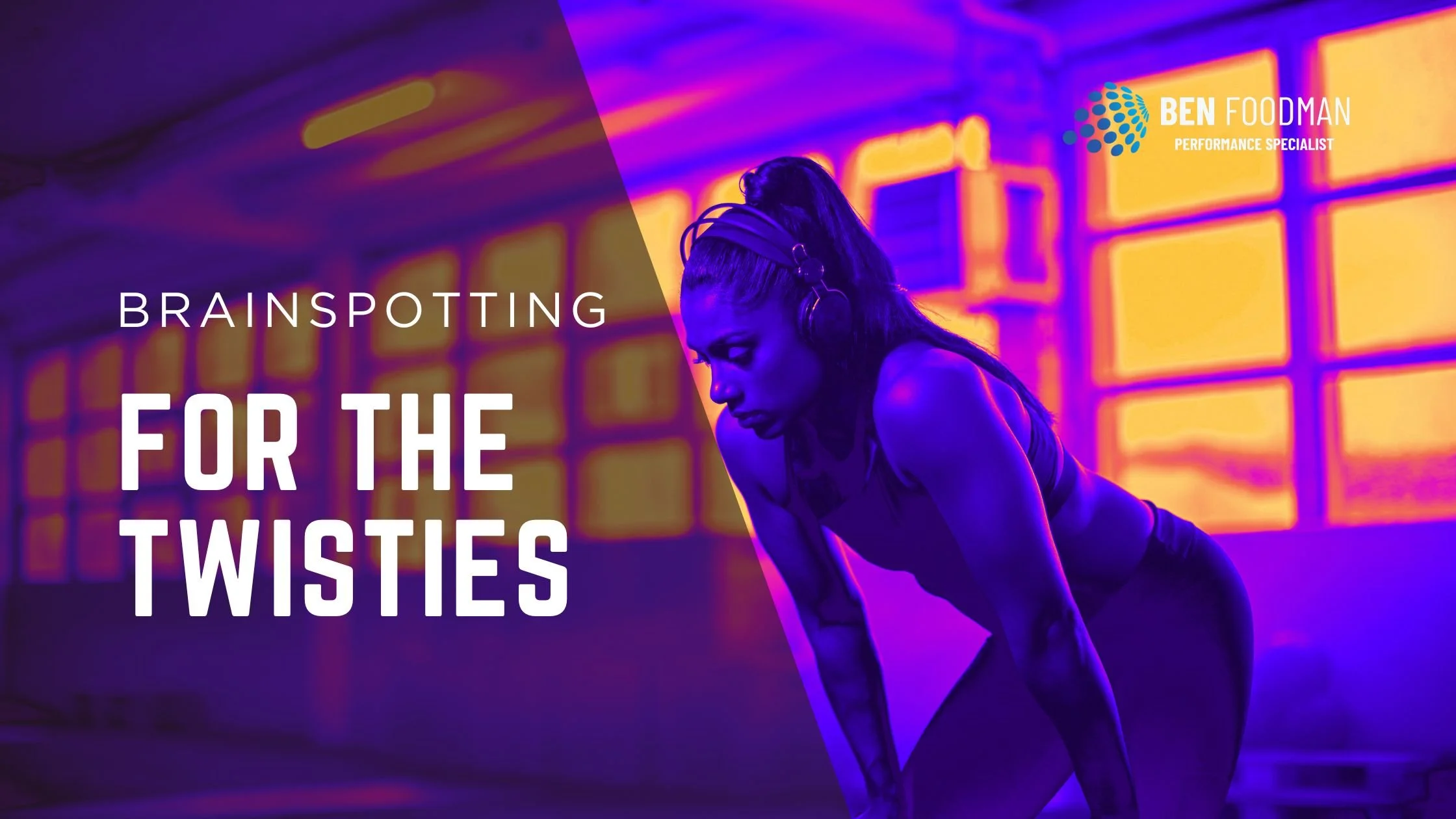

How Do Cheerleaders & Gymnasts Use Sport Psychology To Cure The Twisties?
When cheerleaders and gymnasts work with sport psychologists & mental performance experts like CMPCs to overcome this mental block, the top experts will use trauma-informed interventions. Specifically, a technique called Brainspotting, which evolved from the principles behind EMDR (eye movement desensitization & reprocessing), has been shown to be effective at helping athletes with the twisties. This blog post reviews the neuroscience that explains how the twisties occur, and why using trauma-informed approaches is typically the most effective path.
Updated 7/25/26, written by Benjamin Foodman, CMPC, LCSW, CSCS
About the Author
Ben Foodman is a licensed psychotherapist & performance specialist. He owns his private practice located in Charlotte North Carolina where he specializes in working with athletes to help them overcome mental blocks (the yips), PTSD, ADD / ADHD and achieve flow states through the techniques of Brainspotting & Neurofeedback. If you are interested in services, use the link here! Enjoy the article below!

Table Of Contents
How Do Sport Psychologists Help Gymnasts & Cheerleaders Cure The Twisties?
Sport psychologists help gymnasts and cheerleaders with the twisties by treating them as what they are: the aerial-sport version of the yips, an involuntary mental block produced by the nervous system rather than a mechanics or effort problem. Because the block is generated in the deeper regions of the brain, trauma-informed interventions typically succeed where pep talks and extra reps fall short.
Sports competitions are psychologically demanding no matter what level of experience you have. In fact, sports can be so mentally exhausting that the experience of participating in sports can cause psychological issues. For instance in baseball, a significant number of athletes will experience mental blocks which is commonly known as the Yips. I have written about this extensively in previous Training Reports. However, this issue is not exclusive to baseball athletes. Cheerleaders and Gymnastics athletes will also experience this as well.
While golfers and baseball players refer to mental blocks as the Yips, Gymnasts and Cheerleaders refer to this issue as the Twisties. For this issue of the Training Report, I wanted to take the time to discuss how this mental block affects gymnasts and cheerleaders. First, I will explore common symptoms that arise with the Twisties. Next I will discuss the neuroscience behind the twisties, and finally I will review possible interventions these athletes can use to overcome this psychological obstacle. Let’s begin by reviewing common Twisties symptoms.

What Are Common Symptoms Of The Twisties Gymnasts & Cheerleaders Experience?
Common twisties symptoms include involuntary freeze responses before complex movements, blacking out and not remembering what happened before or during a skill, abnormal muscle tension or temperature changes in random areas of the body, and involuntary muscle spasms. These athletes are often told they have focal dystonia or need better self-talk, and both explanations typically miss what the twisties actually are.
Through my work with gymnasts and cheerleaders, I have come to find that there are common experiences that all of these athletes report. Examples of the Twisties include but are not limited to the following:
involuntary freeze responses before executing complex movements
completely ‘blacking out’ and not remembering what happened prior, during and/or after a movements
abnormal muscle tension or temperature change sensations in random areas of the body
involuntary muscle spasms, etc.
When cheerleading and gymnastics athletes go to consult with sport psychologists, they will often be told that they are dealing with either Focal Dystonia or need to sharpen their pre-performance routines through positive self-talk and imagery. Unfortunately, neither of these explanations or approaches will be helpful because there is a massive misunderstanding of what the Twisties actually is.
The truth is that the Twisties is unprocessed trauma and is actually a PTSD response. When people hear the words trauma or PTSD, they immediately think that these words do not belong in the same sentence as sports. But if you know anything about Gymnastics or Cheerleading, you would know that these are some of the most physically brutal sports on the market. Don’t just take my word for it either. If you were to look at the Strength & Conditioning research on sports related injury rates per sport, gymnastics and cheerleading consistently rank near the top 5 to top 10. Furthermore in my experience, while there are many positive coaches in this sport, there are a significant amount of toxic coaches and gyms where athletes are subject to verbal, emotional and sometimes physical abuse. Let’s explore the neuroscience to help explain why this is the case.
How Does The Neuroscience Explain The Twisties & The Yips?
The neuroscience shows that the brain files experiences one of two ways: digested experiences become skill with no fear attached, while overwhelming experiences stay frozen with their original sensations and emotions intact. When a skill or setting resembles the original moment, the stored pieces can fire mid-rotation, and because the brain's alarm runs faster than conscious thought, the athlete loses the automatic movement before the rational brain can intervene.
In the book This Is Your Brain On Sports by David Grand, the author goes into great detail to explain the neuroscience of mental blocks like the Twisties:
In parallel fashion, the brain attempts to always move toward a state of psychological equilibrium. Over the course of our lives, we are exposed to a variety of life experiences, some positive, some neutral, and some negative
Through a natural assimilation process, the brain adaptively processes these experiences, so they are constructively integrated. What is useful from the experience is learned and stored in the brain with the appropriate emotion and is available for future use
When an experience is successfully assimilated or digested it is stored in the brain with little attached intense emotion or physical sensation. When we recall such an incident, we don’t reexperience the old emotion or sensation with it
In this way we are informed by our past experiences and memories but not controlled by them and with sports our present athletic performances are not burdened by emotional or physical baggage from the past, only learned experience
By contrast, trauma or any strongly negatively charged experience isn’t adequately assimilated or processed. Instead, the upsetting incident remains stuck in the system in broken pieces
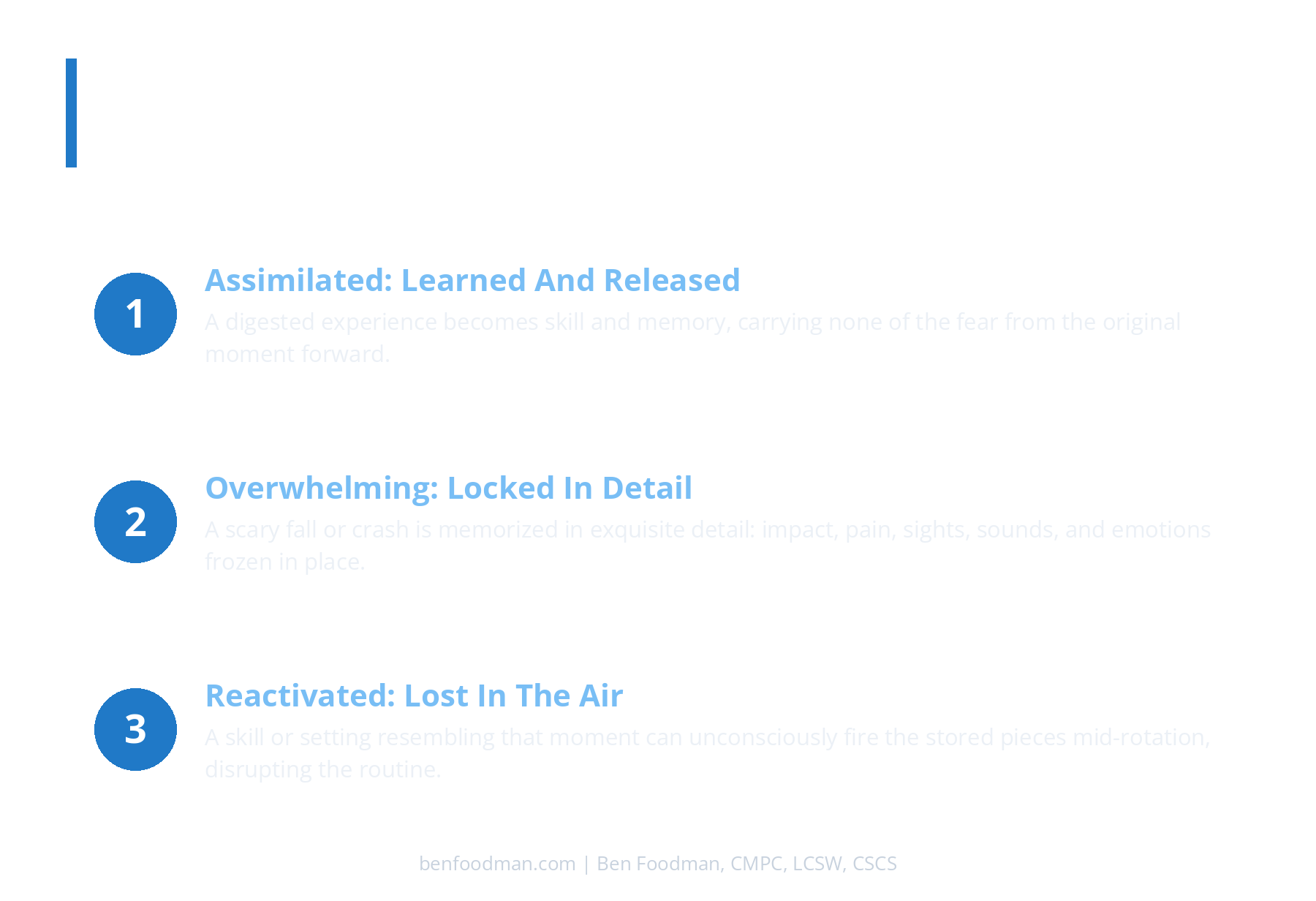
The body instantly memorizes the physical experience of the trauma in exquisite detail, including the body sensations of the impact and pain, along with the associated sights, sounds, smells and tastes
The attached emotions and where they are felt in the body are frozen as well. The brain is overwhelmed and instead of getting digested, all of the information attached to the injury, including the negative thoughts is stored in the brain in exactly the same form it was initially experienced
Days, week, months or even years later when the athlete is in a situation reminiscent of the original trauma or experiences prolonged stress, the upsetting experience may be unconsciously activated, thus interfering with the performance of the moment
These components represent all of the sensory details from the earlier event that were frozen in the brain and body in their original disturbing state: the images, lighting, emotions, physical movements, sounds, or smells
The unique sensory details later returning to consciousness cause the performance disrupting symptoms so common in mental blocks

David Grand is not the only individual connecting the defense mechanisms of trauma to sports. In the book The Body Keeps The Score, Dr. Bessel Van Der Kolk goes even deeper explaining how the mechanisms of the brain respond to stress, which in turn create the symptoms of the Yips:
The emotional brain has first dibs on interpreting incoming information. Sensory information about the environment and body state received by the eyes, ears, touch, kinesthetic sense, etc. converges on the thalamus where it is processed and then passed on to the amygdala to interpret its emotional significance
This occurs with lightning speed. If a threat is detected, the amygdala sends messages to the hypothalamus to secrete stress hormones to defend against that threat. The neuroscientist Joseph LeDoux calls this the low road
The second neural pathway, the high road, runs from the thalamus via the hippocampus and anterior cingulate, to the prefrontal cortex, the rational brain, for a conscious and much more refined interpretation
This takes several microseconds longer. If the interpretation of threat by the amygdala is too intense, and/or the filtering system from the higher areas of the brain are too weak, as often happens in PTSD, people lose control over automatic emergency response, like prolonged startle or aggressive outbursts
Now that we have a better understanding of some of the neuroscience behind mental blocks (AKA The Twisties), let’s explore a specific intervention that gymnasts and cheerleaders can use to potentially clear the Twisties: Brainspotting.
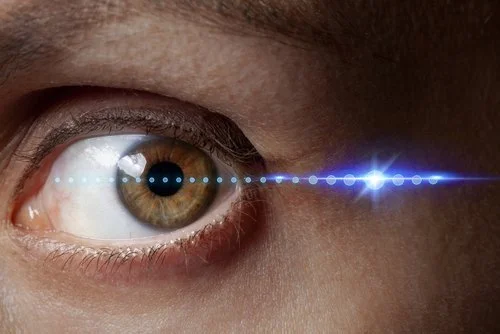
How Do Sport Psychologists Use Brainspotting To Help With The Twisties?
Brainspotting uses the athlete's field of vision to locate and process the unresolved issue behind the block. Because nearly half the brain is dedicated to vision, holding a relevant eye position with focused mindfulness engages the regions responsible for regulation and bypasses the ones that are not, helping gymnasts and cheerleaders move from constantly coping toward not needing to cope at all.
There are many different trauma-informed interventions that athletes can use to help with these issues that would be highly effective, but my favorite intervention to use is Brainspotting.
Brainspottingis a brain-based psychotherapy technique that utilizes the client’s field of vision to identify unresolved psychological issues
In Brainspotting we say ‘where you look affects how you feel’ and through this process clients have the ability to access the parts of their brain that traditional psychotherapy approaches such as cognitive behavioral therapy are unable to do
This results in clients being able to directly address the true ‘underlying’ issue (which we refer to as a Brain Spot) that has created conflict, allowing individuals to move from needing to constantly cope to not needing to cope at all
Through my work with cheerleaders and gymnastics athletes, I have had tremendous success helping these individuals clear their mental blocks which ultimately helped them regain their confidence!
So what can athletes expect when they go through a Brainspotting session? When an athlete goes to work with a Brainspotting sports therapist the client and clinician will select a specific issue that is causing the client distress. Examples of issues could be emotionally traumatic experiences like sports-related injuries, sports humiliations, or anxiety that comes up when an athlete visualizes an upcoming performance. From there the clinician will have the athlete identify the somatic sensations associated with that memory and hold their visual focus on a pointer while moving their eyes. During this process the client will work with the clinician to identify a reflex (e.g. usually a significant increase in the feelings of distress) and process from there. If you would like to learn more, use this link or check out my Brainspotting resource guide!

Frequently Asked Questions About Cheerleader Athletes & The Twisties
-
No. The twisties are an involuntary response, in the same way that when we get jump-scared, we do not choose to be startled by whatever startled us. The twisties are not something athletes choose to do; they are a built-in reflex that acts as a defense mechanism whenever the brain decides we are in danger. If anything, the twisties are proof the athlete's protective wiring works, which is exactly why toughness talk does not fix them.
-
Yes. As long as the intervention is somatic and trauma-informed, it can be helpful, because those are the approaches that reach the regions of the brain where the block is actually produced. Examples include EMDR (eye movement desensitization and reprocessing), biofeedback, neurofeedback, and interventions rooted in Polyvagal theory. Approaches that rely on logic and self-talk alone typically fall short because the twisties are not generated in the thinking brain.
-
Yes, but context matters. The twisties are a stress-based protective response, which means new overwhelming experiences or prolonged stress with no recovery can bring them back. Athletes who continue regular mental training with a sport psychologist or CMPC using trauma-informed interventions such as EMDR or Brainspotting put themselves in a much stronger position to prevent a return, because they are processing stress as it accumulates rather than letting it build. On average, clearing a mental block through this work takes 15 to 25 sessions.
Note To Reader:
If you are an athlete reading this segment of the TRAINING REPORT, hopefully this content was helpful! I put the Training Report together because I felt like many of the discussions on issues such as the Yips/mental blocks, strength training & other subject matter on athlete performance concepts were really missing the mark on these ideas (e.g. how trauma is the direct cause of the Yips). If you are interested in learning more, make sure to subscribe below for when I put out new content on issues related to sport psychology & athlete performance! Also, if you are looking to work with a mental performance specialist, you are in the right place! USE THIS LINK to reach out to me to see if my services are the right fit for your goals!
ARE YOU ON THE LIST?
Make sure you’re signed up to Ben’s mailing list to receive news & updates on new strategies in sport psychology, upcoming workshops & products. Don’t wait, sign up now!
Check Out The Previous Training Reports!