
Why Does My Quarterback Look Great in Practice but Not Like Himself in Games?
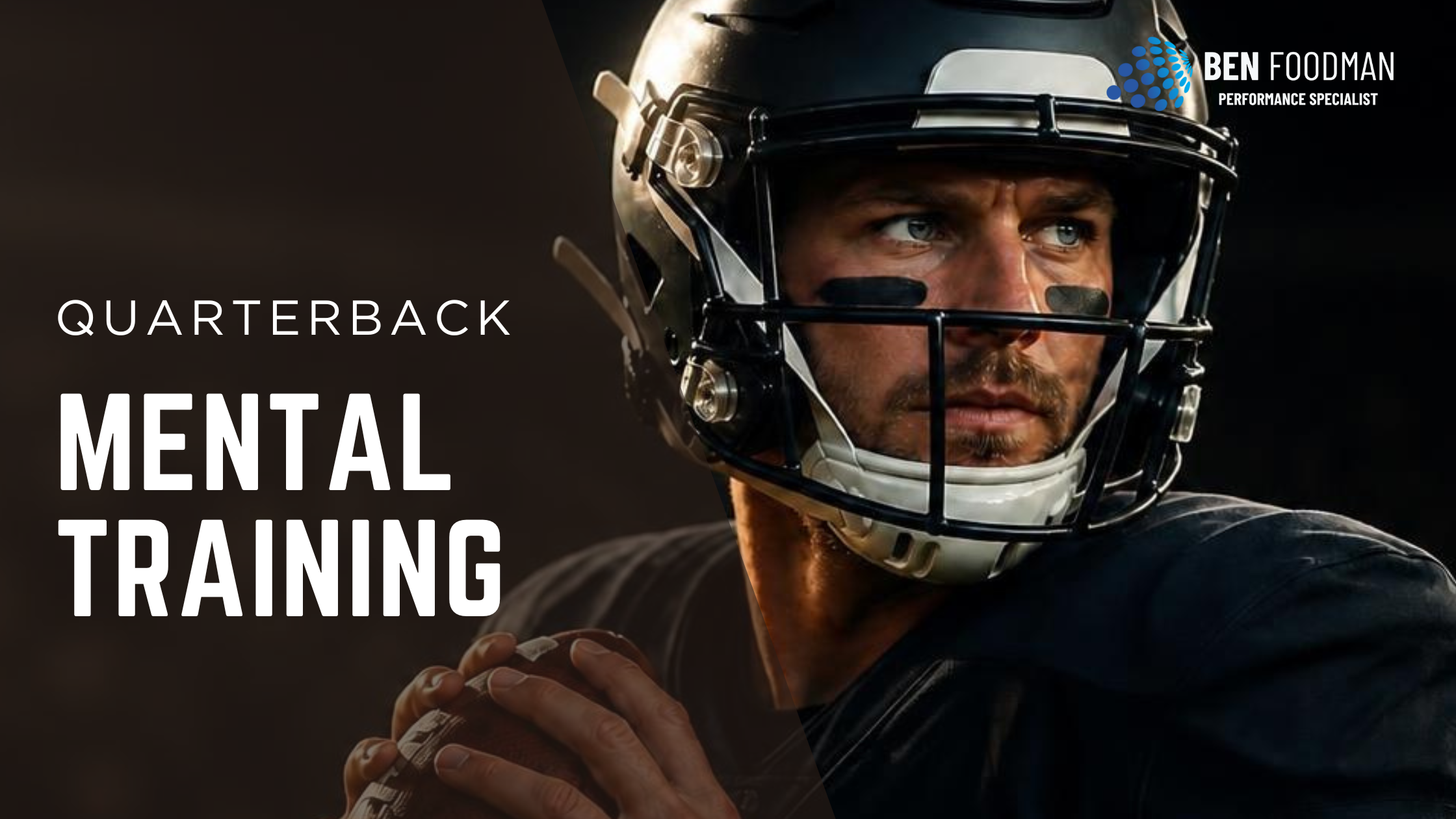
Quarterbacks who play free in practice and tight in football games are exhibiting the classic symptoms of a mental block. Mental blocks are involuntary in nature and are the end result of the athlete’s brain having reached its’ stress-threshold capacity in a live performance or high stress event. This is because typically practices & scrimmages (while they can most certainly be intense) are still not as high stakes as a real competition and the athlete’s subcortical brain recognizes this. The way to overcome this is not through more film study, fixing throwing mechanics or focusing on the mental block as the underlying issue. Instead, quarterback’s need to work with sport psychology specialists on training their nervous system to become comfortable with discomfort which in turn will allow them to reset faster after setbacks, rather than staying frozen and repeating mistakes.
Published on 9/2/26, written by Benjamin Foodman, CMPC, LCSW, CSCS
Ben Foodman is a licensed psychotherapist & Certified Mental Performance Consultant (CMPC) through the Association for Applied Sport Psychology (AASP). He owns his private practice located in Charlotte North Carolina where he specializes in working with athletes to help them overcome mental blocks (the yips), increase mental toughness and improve focus using techniques such as Brainspotting, biofeedback, exercise science and sport psychology. If you are interested in services, use the link here! Enjoy the article below!
Table Of Contents

What does it look like when a quarterback is playing tight instead of playing free?
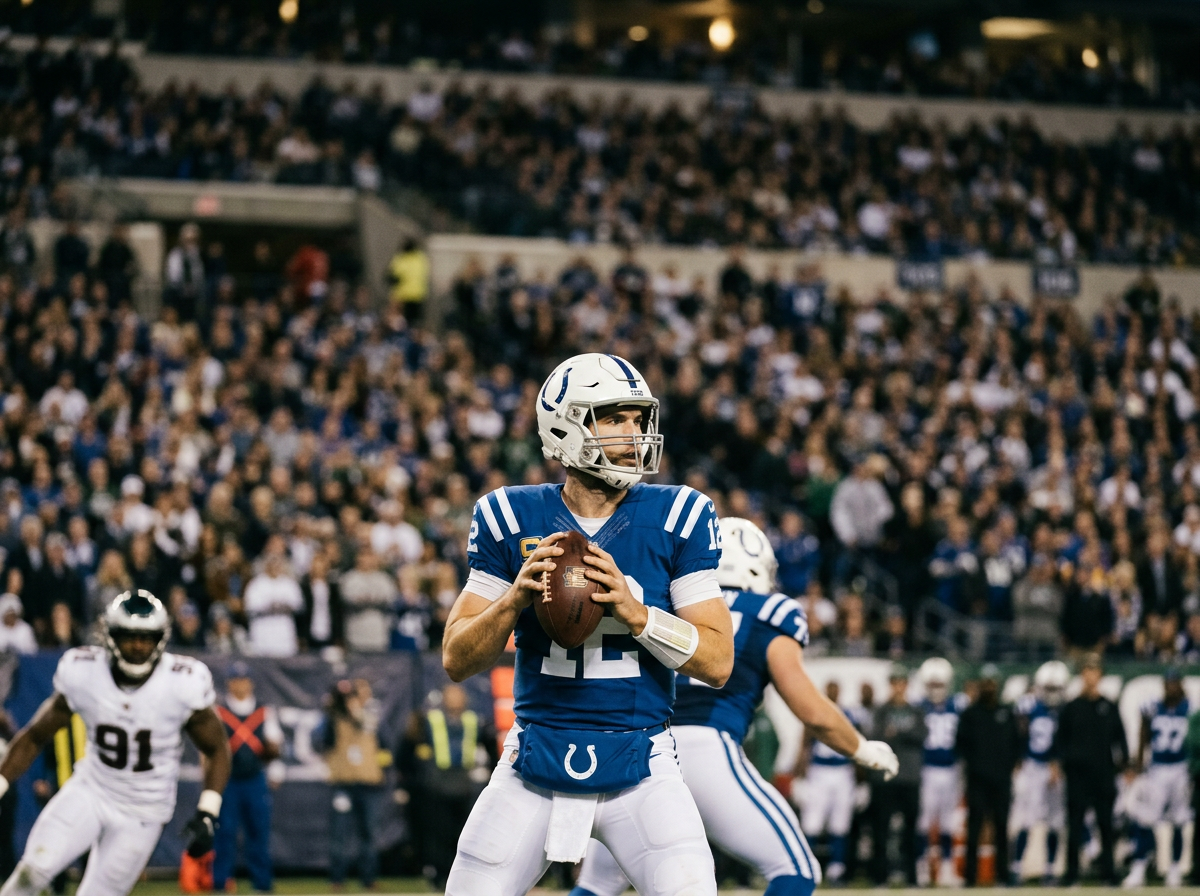
He holds the ball on throws he makes every Tuesday, checks down when the deep guy is open, and looks like a different player than the one you watched at practice. The gap between those two players, not any single bad throw, is the sign of a mental block. Their body language also looks ‘tight’ which is the end-state of their subcortical brain producing an involuntary stress response which can come in the form of excessive muscle tension, body temperature changes, or a ‘shut-down’ response which looks like slumped shoulders or ‘deer in the headlights’ facial affect.
When quarterbacks are experiencing mental blocks, their support system (e.g. parents, siblings, agents, coaches, etc.) call desperate for help, because they can clearly see there is a problem, they have asked the quarterback what they are experiencing, but no one is able to clearly articulate what is going on. They watched him in seven-on-seven or at a camp, and he was decisive, loose, and accurate. Then the lights came on, and he was holding the ball, drifting in the pocket, looking to the sideline between plays, and missing throws he does not miss. Typically, coaches and the quarterback’s support system will use the following descriptions to ‘diagnose’ the problem:
He looks lost out there
He looks like a deer in the headlights
He is too much in his head
He is playing tight
He’s over thinking it
He’s not aggressive enough
He needs to get out of his head
He doesn’t want it bad enough
What can be even more disconcerting in these situations, is when the quarterback reports that he does not know what is wrong, but that he ‘doesn’t feel like himself’ anymore. In my practice, typically what I have seen is that the quarterback in these cases will do excessive dry throwing to try and work through the issue, or they will consult with a quarterback coach who specializes in throwing biomechanics. Alternatively, quarterbacks will start to retreat from the ‘spotlight’ and resort to excessive partying, not live up to their responsibilities, or even be in denial and refuse to go see a sport psychologist. But here’s the deal, while this may look like a complicated problem, the overwhelming majority of the time, the problem is very easy to understand. A quarterback whose mechanics are broken will look broken in practice too. A quarterback who has a mental block looks fine until something about the situation, the score, the crowd, being observed by scouts from his favorite school, the starting job on the line, changes what his body is doing. Interestingly, this issue that quarterbacks face in many instances is the same one that baseball players have to overcome, which is called the Yips. I talk more about that on my Yips mental block page. However, this post is about what it looks like on a quarterback and what to do about it.
Is it a playbook problem, a coaching problem, or a mental block?
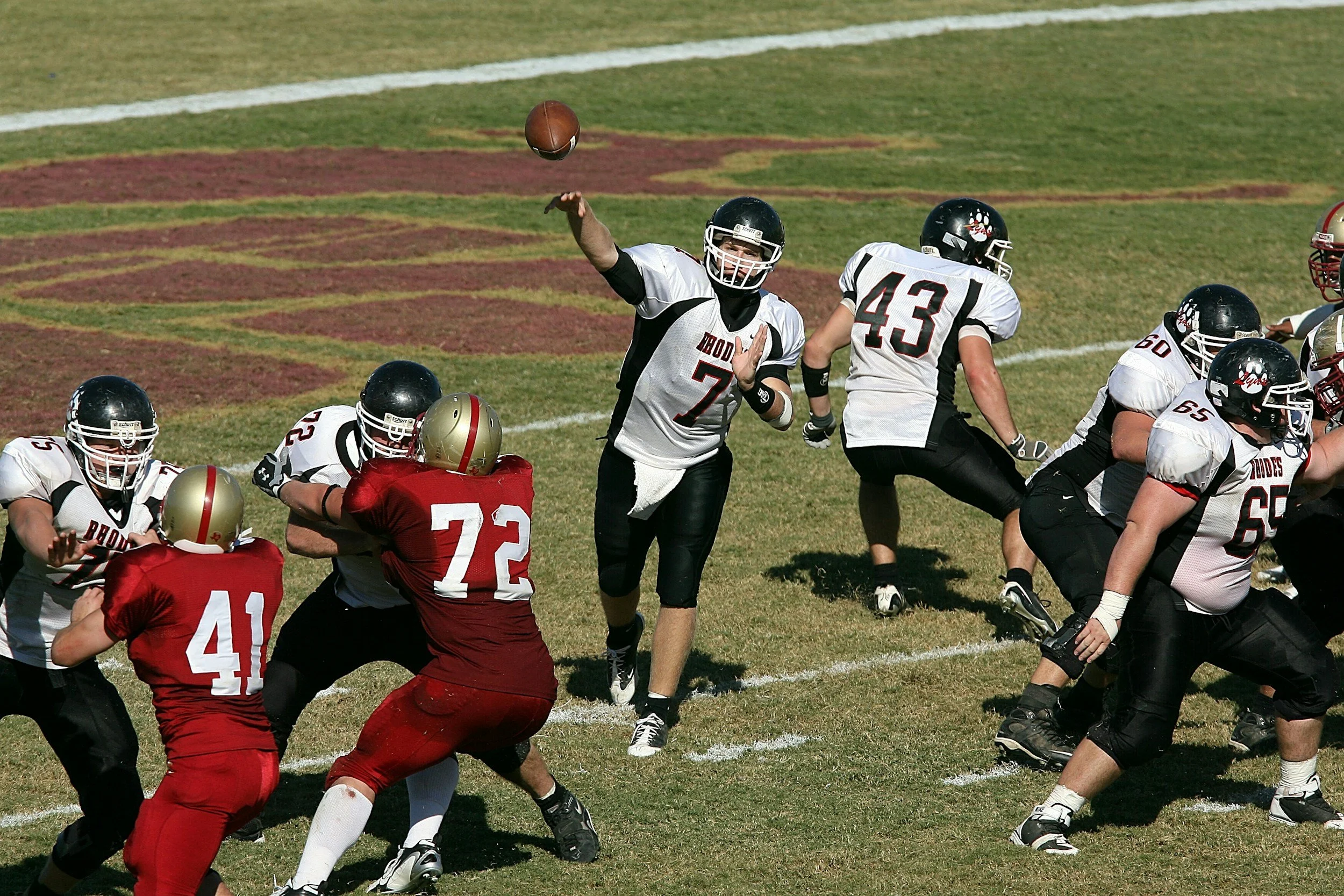
When quarterbacks look great in practice but not in games, you can rule out the first two problems. While football practices and scrimmages can be challenging, they are never as psychologically stressful as game day. A live competition causes the quarterback’s brain to produce an involuntary stress-response, which comes in the form of a mental block. Fixing throwing mechanics can actually make things worse, and instead quarterbacks need to use a specialized sport psychology methodology that trains the nervous system to acclimate to the environment.
Some quarterback trainers explain this entire category of problem as cognitive overload: too many plays, too many reads, not enough reps to make them automatic, so the QB is processing more than his brain can handle at game speed. For a certain kid, that is exactly right. A sophomore who was handed a varsity playbook in August and is unsure on a third of his reads is not blocked, he is simply unable to effectively take on that much information. The fix for that kid is a smaller core set of plays, not asking them to do too much, and giving them more reps. Any good QB coach will spot it and say so. The cognitive overload explanation stops working when the performance breakdowns ‘don’t make sense’. Here are the three questions to ask before you call anyone.
Does he know where the ball is supposed to go? Ask him. Better, ask his coach. If he can walk through the progression on film after the game and identify the open receiver, the playbook is not the problem.
Does he have the arm to get it there? If he was making the throw in June and the arm has not changed, the arm is not the problem. You might notice some foot mechanics issues, but even then, it is most likely not a technique issue.
Does it happen in practice? This is the one that separates a coaching problem from a mental block. Mechanical flaws are consistent. A dropped elbow shows up on Tuesday and Friday or Saturday. If the quarterback you see in practice and the quarterback you see in games are two different players, mechanics are not what changed between them.
Quarterback coaches can absolutely be an integral part of the ‘mental game’, but like all professionals, unless they have specialized training in neuropsychology and the human nervous system, this issue can only be addressed a very specific way. When the issue is a mental block, using traditional sport psychology tools such as positive self-talk, positive pre-performance, mindset coaching, etc. will not be the correct intervention for this issue. This all has to do with how specific regions of the brain are responsible for producing these responses as opposed to other regions of the brain.
Why doesn't more practice fix a mental block?
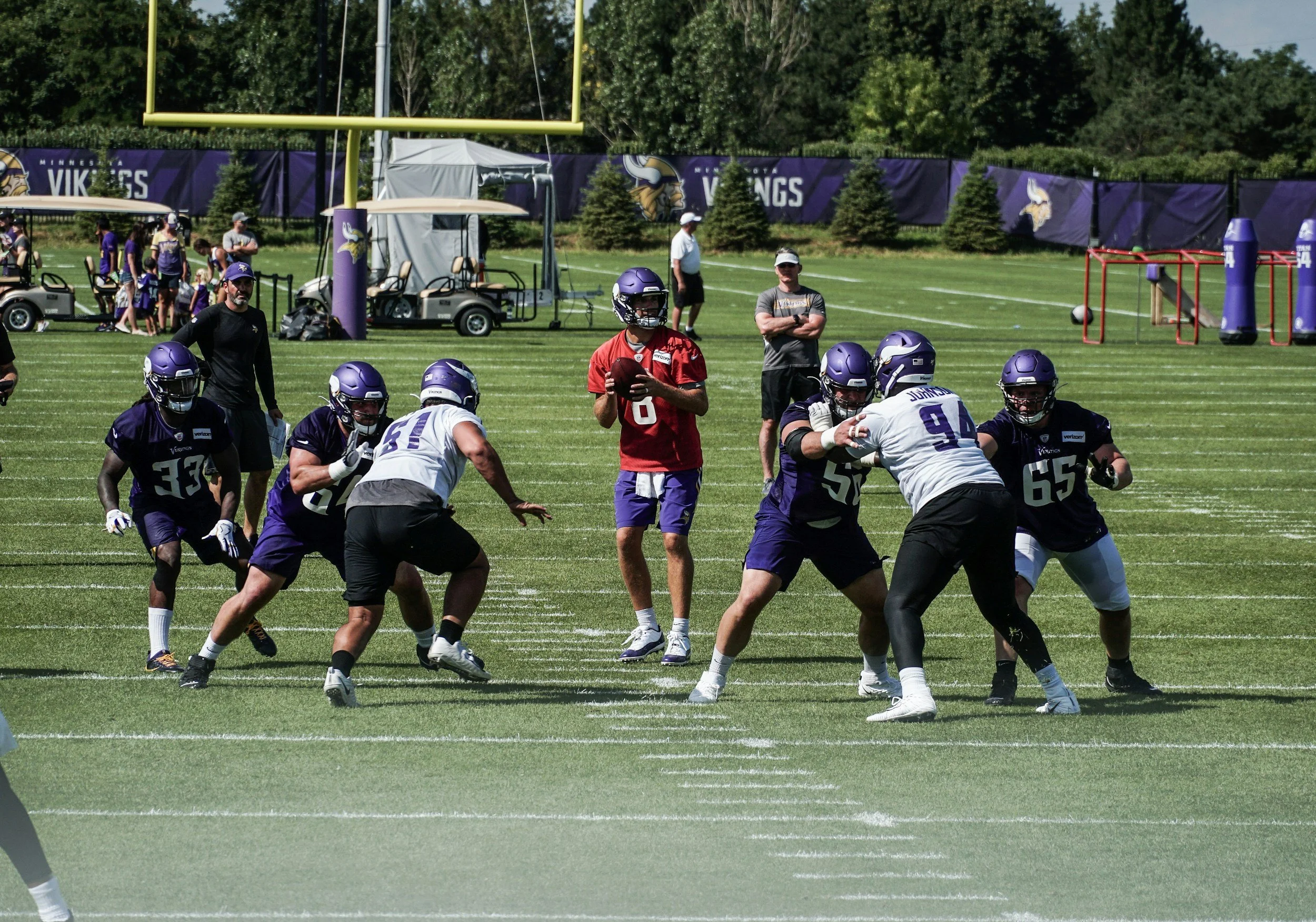
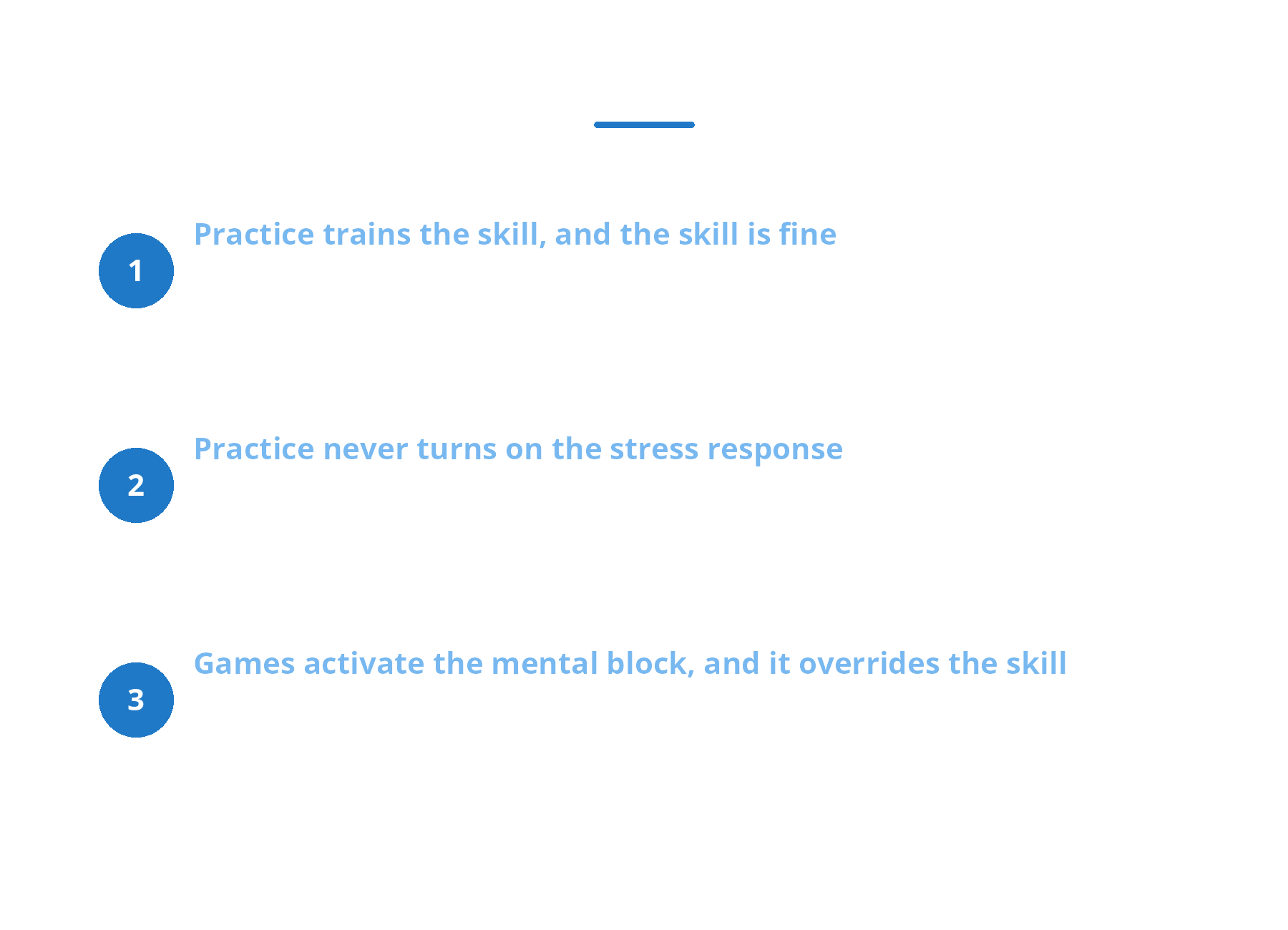
Because the region of the brain that produces this involuntary stress responses only responds to somatic-based interventions that focus on training the nervous system to become more tolerant of these mental blocks. Practice does not trigger the stress response that games do, so more practice will not override the brain’s involuntary stress response. The quarterback can throw ten thousand reps in a setting his brain detects as low stress, but this will almost never condition the brain to shut off this response. What this means is that athletes need to focus on training their nervous system to withstand that environment, not their throwing mechanics.
This is the part that frustrates parents and coaches the most, because more work is the answer to almost everything else in football. It is not the answer here, and the reason is physiological rather than motivational. To see why, it helps to remember what a well-trained throw is supposed to be. By the time a quarterback reaches high school or college, he has thrown tens of thousands of times. The motion is automatic. It runs on deeper motor systems without conscious thought, which frees his attention for the things that actually impact the play: reading the coverage, feeling the rush, working through his progression. That is what coaches mean when they say a QB is playing free. The throw is fast and repeatable precisely because the thinking mind stays out of the way.
A mental block is a breakdown in that automaticity, but the cause is not mechanical. The quarterback’s body still knows how to make the throw. The interference comes from a different system entirely: the threat-detecting structures in the subcortical brain. When those structures register enough threat, whether from competitive pressure, a specific past experience, or accumulated stress the body has not fully processed, they shift him into a protective, self-monitoring state. A fear state actually downregulates the prefrontal regions that support smooth, deliberate control, which is why he cannot simply think his way back into the throw mid-game, no matter how badly he wants to. It is also why a blocked quarterback so often shows the physical signs of a threat state: the tight upper body, the rushed clock, the eyes that stop scanning.
Once he is in that protective state, the throw degrades in a specific way. He starts consciously overfocusing on each aspect of the movement and begins to micro-manage his mechanics which in turn both looks and feels unnatural to the athlete. Researchers call this reinvestment: under pressure, an athlete pours rule-based control back into a skill that had become automatic, and the skill regresses to an earlier, clumsier stage of learning. That is the hesitation, the double clutch, the hitch in the throw, the checkdown he takes when the deep ball was there. The harder he tries to over control his throwing mechanics, the more he interferes with the part of his brain that used to help him become automatic in his movements.
This is why the most common response, treating it as a mechanical flaw and drilling harder, so reliably disappoints. The pattern parents and coaches describe is consistent: the private trainer adjusts the motion, the session looks great, everyone leaves encouraged, and by the next game the hesitation is back. That is not a failure of coaching. The trainer is fixing what a trainer can see, and the mechanics were never broken. More reps aimed at the movement pull even more conscious attention onto it, which feeds the exact reinvestment loop causing the problem. If the breakdown lives in the nervous system and not the mechanics, the fix has to work at the level of the nervous system too.
What actually fixes a quarterback's mental block?
Quarterbacks dealing with a mental block need a sport psychology intervention that target the central nervous system and train the subcortical brain to become more comfortable with discomfort. Traditional approaches typically use positive psychology to overwhelm negative thoughts with positive ones or use motor learning techniques to improve processing speed, and neither works for this issue because the region of the brain producing the block only responds to interventions targeting involuntary somatic reactions. The primary method I use for this is Brainspotting, and long-standing blocks resolve gradually over 15 to 25 sessions on average.
Everything in the previous section pointed at one conclusion: if the interference comes from the brain's threat-detecting structures, then the fix has to reach those structures. The problem is that those regions of the brain are not the regions you talk with. They run on stress signals and body sensation, not language, which is why a quarterback can know his mechanics are fine, want desperately to play free, and still watch his body hesitate. More film, better self-talk, and encouraging conversations all speak to the thinking brain. The block does not originate from there. Brainspotting works with the regions of the brain that produce these responses.
The method uses a specific eye position, held with sustained focus, to help the brain access and process the stored stress response that has been firing when the quarterback drops back. The proposed mechanism, developed by Corrigan and Grand, is that a held gaze position appears to engage the deep midbrain pathways where these responses are stored, letting the brain finish processing what got interrupted during a high stress situation. That model is still being tested rather than settled fact, but it converges with what Grand has documented across two decades of this work: where you look affects how you feel. Furthermore, many of the central components of this intervention are based in EMDR, which is still considered the gold standard of psychotherapy.
Parents, coaches & quarterbacks themselves should know what this is not. It is not visualization, not hypnosis, not a relaxation exercise, and not a pep talk. Sessions are usually difficult while they are happening. Quarterbacks access the tension, the memories, and the body sensations they have been avoiding, and that discomfort is the sign the nervous system is finally processing rather than suppressing. What athletes consistently report afterward is a significant release of stress, and becoming comfortable with that discomfort is not a side effect of the training. It is the training, the same way conditioning works everywhere else in sport.
On timelines, honesty beats marketing. A block tied to one specific moment, one hit, one benching, one public failure, can sometimes resolve in a limited number of sessions. Most quarterback blocks are not that simple to get over. They build from layered pressure across seasons, which is why athletes I work with average 15 to 25 sessions, typically weekly or every two weeks, with progress showing up as the block firing less often, less intensely, and for shorter stretches rather than vanishing in one dramatic moment. A full walkthrough of what a session looks like is in my guide to what happens in a Brainspotting session for athletes.
Who should we actually talk to about a quarterback who is playing tight?
A mental performance specialist who works directly with the body's stress response, and who can tell you in the first conversation whether that is what your son is dealing with. These professionals are usually licensed psychotherapists who also possess certification through the Association for Applied Sport Psychology (AASP) as a Certified Mental Performance Consultant (CMPC). Professionals who possess this dual combination of training represent the top echelon of sport psychology professionals.
A parent who searches for help will be offered three categories. Sport psychology experts (licensed mental health professionals possessing the CMPC) and mental performance consultants (professionals with graduate training in sport psychology holding just the CMPC but no licensure) generally work on mental skills: routines, self-talk, focus, imagery, and confidence. Basic clinical psychologists and therapists are licensed to diagnose and treat mental health conditions, including anxiety disorders, but have no training or AASP CMPC certification to work with athletes. Quarterback trainers work on reads, footwork, and mechanics, and the good ones know when they have run out of coaching fixes.
The part that makes this tricky is that this is a very niche’ and specific problem that requires a combination of specific skills and experiences. There are several factors that prospective athlete clients should consider:
Make sure that the professional you are selecting has the AASP CMPC certification, and if possible also has clinical licensure.
Check to see if they have training in EMDR (Eye Movement Desensitization and Reprocessing), Brainspotting, Biofeedback and/or neurofeedback.
Prepare a thorough list of documentation that lists the quarterback’s injuries. If the professional asks about it, great. If not, find someone else.
Check to make sure that the sport psychology expert is a member of AASP or the Clinical Counseling Sport Psychology Association (CCSPA).
Ask the professional if they know what a SUDS score is and if it is relevant for this particular case. Typically, with confirmed mental blocks it is.
Frequently Asked Questions about quarterback mental blocks
-
In many cases, both. Losing the job raises the stakes on every rep he does get, which feeds the stress response, and the stress response is usually part of why he lost it. Which one came first matters less than the fact that the loop is now running, and it does not break on its own. You most likely need to implement nervous system training like Brainspotting to overcome this issue.
-
Often, yes. A quarterback who cannot get back to neutral after a mistake is showing the same pattern. His nervous system forces his body into a situation where he perceives the game is a threat, with a specific trigger. The interception is the moment the block becomes visible, not the cause of it.
-
Yes, frequently. A quarterback can be fully cleared, fully healthy, and his nervous system still causes flinches when the pocket collapses. The medical side is finished. The nervous system did not get the training it needed, and that is a performance problem, not a medical one.
-
Common, and still a block if it persists past the adjustment window. The speed, the playbook, and the stakes all change at once, and a rough first month is expected. If he is still not himself by midseason, the adjustment explanation doesn’t hold up anymore.
-
Less than you want to. He knows it was bad. What he needs from you is that the car ride home is not a second film session. If you want to help, the most useful thing you can do is make it easy for him to get the right kind of help, which is what the rest of this post is about. If you broke your arm, you would not DIY the problem…you would go see the experts. This is the same situation. Professionals that work with these issues have spent years receiving graduate level training and acquiring advanced certifications.
Is it worth getting help for a quarterback who is playing tight in games?
Yes, if he knows the playbook, has the arm, and still does not look like himself when the game is live. This requires professional help, and unless he is working with someone who has graduate level training in sport psychology (graduate school, AASP CMPC + licensure) and specialized training in the human nervous system (brainspotting, EMDR, biofeedback & neurofeedback), then it is unlikely he will overcome this issue.
If what you have read here matches what you are seeing, the next step is a discovery call. It is free, confidential, done over video, and takes about an hour. We talk through what you are seeing, what has already been tried, and whether this is a mental block I can help with. If it is not the right fit, I will tell you that and point you toward someone who is a better fit. You can set it up using this link here or the contact form below. If you would like to learn more about my services, you can also use this link here.
Ready to implement these tactics? Book a consultation to see if services are right for you!
Sign up to learn more about new updates with Ben’s practice!
Check out older Training Report articles below for more resources!