
Why Do Elite Athletes In Charlotte, North Carolina Need A Sport Psychologist?
All sports are stress tests which require maximum body focus and mental focus. Over time, these stress tests take a toll on the athlete which can impact their performance. Most athletes just focus on body recovery, but neuroscience research is showing that athletes that psychologically recover will physically recover faster and increase their performance outcomes. This article explains why athletes need to work with sport psychologists or a CMPC (Certified Mental Performance Consultant) to achieve these outcomes.
Updated on 7/23/26, written by Benjamin Foodman, CMPC, LCSW, CSCS

About the Author
Ben Foodman is a licensed psychotherapist & performance specialist. He owns his private practice located in Charlotte North Carolina where he specializes in working with athletes to help them overcome mental blocks (the yips), PTSD, ADD / ADHD and achieve flow states through the techniques of Brainspotting & Neurofeedback. If you are interested in services, use the link here! Enjoy the article below!

Table Of Contents
What Are The Mental & Emotional Demands In Competitive Sports?
What Are The Common Psychological Effects Of Competitive Sports On Athletes?
How Do Sport Psychologists Help Athletes Sustain Mental Endurance?
What Are The Benefits All Athletes Can Experience With A Sport Psychologist?
Frequently Asked Questions About Athletes Choosing Sport Psychologists or a CMPC
Why Should Athletes Use Mental Skills Training?
Athletes use mental skills training for the same reason they use strength coaches and athletic trainers: sports apply repeated stress that the body and mind both have to recover from. Most athletes accept physical support without hesitation but resist mental performance support, and that gap is typically what separates athletes who sustain their peak from athletes whose careers get cut short by problems they never addressed.
I have been fortunate to work with so many amazing people that compete at all levels of sports. As much as I hope that I have helped athletes improve their mental performance, they have taught me just as much about the journey of being a competitive athlete. I have seen unbelievable moments of triumph and incredible displays of mental toughness that would be inspiring for anyone to witness. However, I have also seen the ugly side of sports and how cruel this industry can be to coaches, athletes and parents alike. To be blunt, some of the most important lessons I have learned have been through my work with athletes that have suffered from the unfair aspects of competitive sports.
As such, I have developed a base of knowledge that has been sharpened by these experiences and has allowed me to more effectively help athletes navigate these potential complexities. Interestingly, I am still introduced to athletes that are not convinced of the need to work with a sport psychologist or mental performance coach because these athletes “want to do it myself”. At the same time, athletes would not reject help from a strength & conditioning specialist to help them physically train for their sport. For this issue of the Training Report, I am going to explore why athletes that want to reach their peak potential need a sport psychologist or mental performance coach to achieve their goals.
What Are The Mental & Emotional Demands In Competitive Sports?
Competing at the collegiate, Olympic, and professional level applies pressures most athletes and families never anticipate, including the business realities of how organizations operate. Left unchecked, that pressure typically shows up as the yips or unexplained mental blocks, abnormal muscle tension, higher injury rates and slower recovery, social isolation, overtraining, transfers or early exits from sport, anxiety, and substance use.
While I have worked with many veteran athletes competing at all levels of sports, many of the client prospects that reach out to me are individuals that are aspiring to compete at the collegiate, Olympic & professional level of sports. Oftentimes, there is a serious lack of understanding as to how difficult and unfair competition can be at the next level. This is in large part due to the fact that many of these individuals and their families are unfamiliar with how team operations work in professional and collegiate sport organizations, as well as the business aspect of this level of competition. The reason this is important to understand is because many up-and-coming athletes will be seriously psychologically and emotionally tested at the next level due to these external pressures, and as such can experience a variety of negative symptoms that will impact their bottom-line performance if left unchecked.

Many of the athletes I have worked with that compete at the professional and collegiate level experience the following symptoms from performance pressure:
the yips or unexplained mental blocks
increased stress responses which create abnormal muscle tension
increased injury or low rates of recovery
increase in social isolation
increased likelihood of transferring to another school or earlier than anticipated exit from sport
overtraining syndrome
anxiety, depression
alcohol/substance use
post-traumatic stress disorder
Many athletes going to compete at this level do not usually believe they will be the “type of athlete” that would experience the previously mentioned issues, but by the time these symptoms occur they will need extensive help to recover due to this oversight. Whether athletes accept it or not, participation in competitive sports for most people will be a traumatic experience with long-term consequences and as such will require CONTINUED SUPPORT throughout their time training.

What Are The Common Psychological Effects Of Competitive Sports On Athletes?
Every competitive sport is a stress test that demands full body focus and full mental focus at once. When any part of that system carries an unresolved issue, the body starts producing error signals and the athlete drifts toward regression. Over a career these become trauma responses, and left unaddressed they typically escalate until an athlete faces an early or forced exit from their sport.
Another reason athletes underestimate the psychological impact that sports will have on their health is due to the lack of neuroscience training that most sport psychologists and coaches are missing. One of the most important things to understand about ALL competitive sports is that they are all stress tests. In order for athletes in any sport to successfully pass the stress test, they need to be able to give full body focus and full mental focus. However, if any part of their body and or mind has an unresolved issue, the body will start creating error signals and move faster towards regression states. Essentially athletes start exhibiting trauma responses over the course of their career. If left unchecked, these trauma responses will only increase and lead to either an early or forced exit from their sport.

Many universities and professional sports organizations are recognizing this, and as such are hiring a sport psychologist or Certified Mental Performance Consultant (CMPC) on staff to help their athletes navigate the mental and emotional hurdles that comes with sports. Unfortunately, what is not often communicated to athletes is that they will need ongoing support as they are going through their journey in their career. Even worse, the field of sport psychology promotes short-term interventions that are meant to get the athlete “back on their feet”, as if they will arrive at a permanent mental state and become psychologically bullet proof. But as I have discussed extensively in previous Training Reports, the environment of sports will always induce stress tests on athletes which will inevitably have an impact on their central nervous system and mental health functioning.
How Do Sport Psychologists Help Athletes Sustain Mental Endurance?
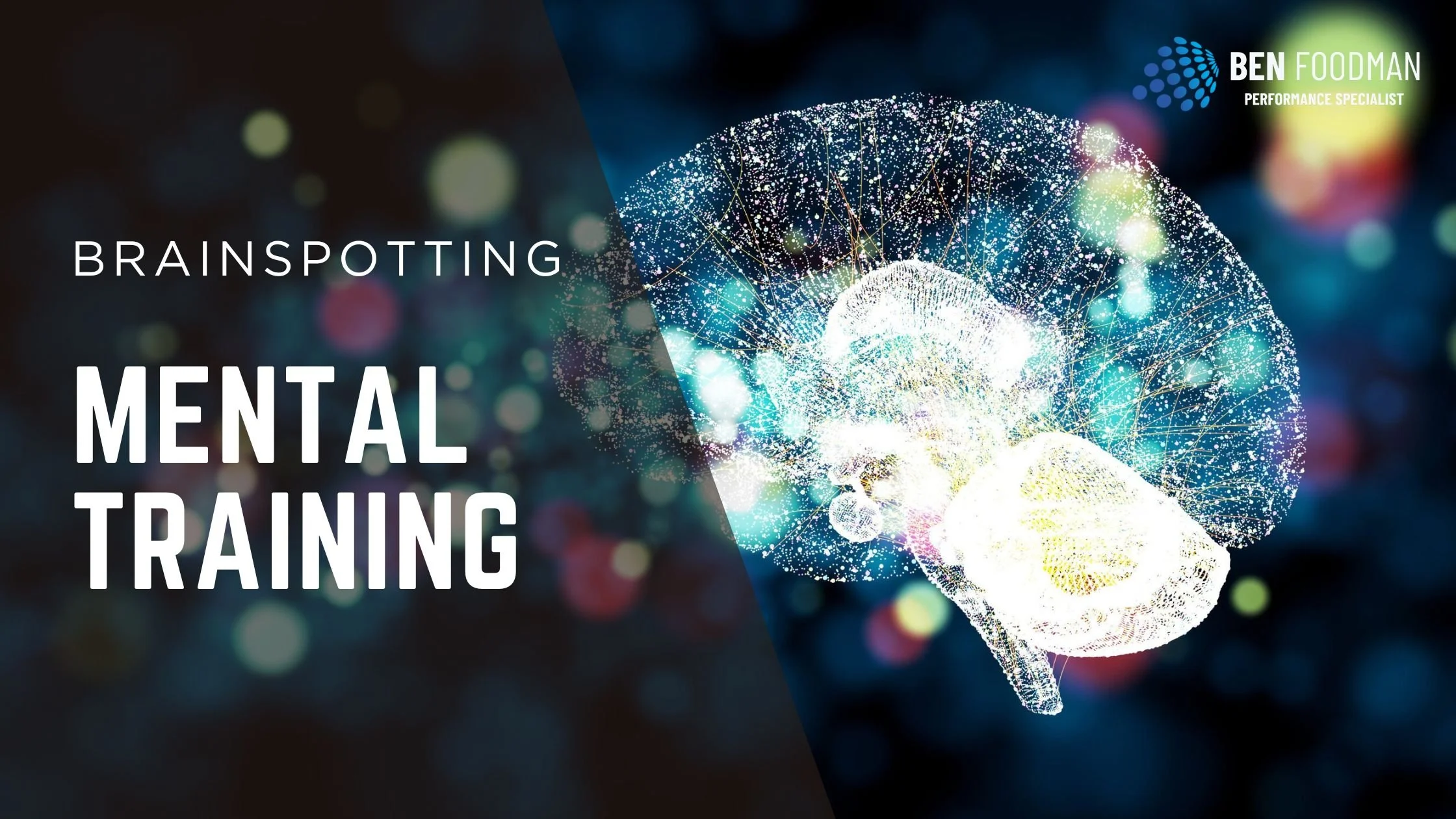
The most efficient interventions for sustaining mental endurance are typically Brainspotting and EMDR. Brainspotting uses the athlete's field of vision to locate unresolved issues such as the yips or mental blocks, and because nearly half the brain is dedicated to vision, pairing eye position with focused mindfulness engages the regions responsible for regulation and bypasses the ones that are not. The goal is resolving the underlying issue rather than building more coping skills on top of it.
When looking at the most effective mental training interventions that sport psychologists and mental performance coaches use, Brainspotting and EMDR (Eye Movement Desensitization & Reprocessing) are amongst the most efficient. When exploring how Brainspotting is used,Brainspotting utilizes the athlete’s field of vision to identify unresolved psychological issues such as the Yips or mental blocks. Through this process athletes have the ability to access the parts of their brain that traditional mental skills approaches can’t. Because almost half of the brain is dedicated to vision, the combined use of eye movement with focused mindfulness helps engage the regions of the brain that are responsible for regulation and bypasses the regions that are not! This results in athletes being able to directly address the true ‘underlying’ issue, which we refer to as a Brain spot. Because Brainspotting is still a relatively new technique, it is not considered an evidence-informed intervention. However, when one studies the neuroscience mechanisms behind this technique and how it helps with stress reduction, it becomes easy to understand why this form of mental training is an effective approach.
In the book This Is Your Brain On Sports by David Grand, the author goes into great detail to explain the neuroscience behind the sports-related stress and how the brain responds to stress events, which therefore makes Brainspotting (and EMDR) a preferred form of mental training. The author describes as follows:
In parallel fashion, the brain attempts to always move toward a state of psychological equilibrium. Over the course of our lives, we are exposed to a variety of life experiences, some positive, some neutral, and some negative.
Through a natural assimilation process, the brain adaptively processes these experiences, so they are constructively integrated. What is useful from the experience is learned and stored in the brain with the appropriate emotion and is available for future use.
When an experience is successfully assimilated or digested it is stored in the brain with little attached intense emotion or physical sensation. When we recall such an incident, we don’t reexperience the old emotion or sensation with it.
In this way we are informed by our past experiences and memories but not controlled by them and with sports our present athletic performances are not burdened by emotional or physical baggage from the past, only learned experience.
By contrast, trauma or any strongly negatively charged experience isn’t adequately assimilated or processed. Instead, the upsetting incident remains stuck in the system in broken pieces
What Are The Benefits All Athletes Can Experience With A Sport Psychologist?
Because sports are permanently stress-inducing, athletes benefit most from ongoing mental training rather than short-term fixes, the same way they maintain their bodies year-round. The mental training that typically produces results is rooted in neuroscience, trauma-informed, and somatic in focus, and athletes who commit to it tend to protect their focus, mental toughness, confidence, and career longevity in ways that mindset advice alone cannot.
In conclusion, because sports are always stress-inducing experiences, athletes will need to regularly engage in mental training the same way they regularly interact with athletic trainers or strength coaches. Furthermore, athletes need to make sure that the mental training they use with sport psychologists is rooted in evidence-informed neuroscience, is trauma-informed and focused on somatic approaches such as mindfulness/mediation. Athletes recognize that their body will need constant maintenance as they train to compete in sports, and by extension will need to adopt a 21st century perspective and treat their mind the same way as their body
If by chance you are interested in learning more about specific providers, my Charlotte, North Carolina practice is specifically designed to help athletes overcome mental blocks (e.g. the Yips, twisties), improve focus, increase aggression and in some cases teach advanced leadership skills. The main interventions I use are as follows:
Brainspotting which is considered a modified version of EMDR (Eye Movement Desensitization & Reprocessing)
Biofeedback & in some instances neurofeedback protocols
Exercise psychology & prehab integrated tactics
Leadership development such as frame control, & persuasive questioning tactics
Preloading methods to increase aggression & focus

Frequently Asked Questions About Athletes Choosing Sport Psychologists or a CMPC
-
Strictly speaking, there is no license called "sport psychologist." The term dates back to the 1950s as an informal label for clinical psychologists working with athletes, but state boards license psychologists, not sport psychologists, so anyone using that title is a licensed psychologist who added training in sport psychology. The field itself includes social workers, marriage and family therapists, and counselors, and most of these professionals focus on mental health. A mental coach such as a Certified Mental Performance Consultant (CMPC) is specifically trained for performance enhancement, which is a different job than treating mental health conditions.
-
No. Many licensed therapists market specialized training with athletes without graduate coursework in sport psychology or the CMPC credential. Athletes should ask directly what sport-specific training a provider has completed and whether they hold the CMPC through AASP (Association for Applied Sport Psychology), since the credential requires supervised applied hours with athletes rather than coursework alone.
-
It depends on what you are trying to solve. If the issue is a mental health condition, you need a licensed clinician. If the issue is performance, such as mental blocks, focus, or confidence under pressure, you need someone trained in performance enhancement. The safest option is a professional who is both licensed in mental health and holds the CMPC through AASP, because they can recognize which category your issue actually falls into and work at either level.
USE THE CONTACT FORM BELOW TO LEARN MORE ABOUT POSSIBLE SERVICES!
Note To Reader:
If you are an athlete reading this segment of the TRAINING REPORT, hopefully this content was helpful! I put the Training Report together because I felt like many of the discussions on issues such as the Yips/mental blocks, strength training & other subject matter on athlete performance concepts were really missing the mark on these ideas (e.g. how trauma is the direct cause of the Yips). If you are interested in learning more, make sure to subscribe below for when I put out new content on issues related to sport psychology & athlete performance! Also, if you are looking to work with a mental performance specialist, you are in the right place! USE THIS LINK to reach out to me to see if my services are the right fit for your goals!
ARE YOU ON THE LIST?
Make sure you’re signed up to Ben’s mailing list to receive news & updates on new strategies in sport psychology, upcoming workshops & products. Don’t wait, sign up now!
Check Out The Previous Training Reports!